 Best Friend Game
Take the BFF Test
Best Friend Game
Take the BFF Test
The average American adult has exactly one close friend. Not a circle of close friends. One. (That's the real stat — mean of 1.0, from a 2023 survey. Median is 2, if you want to feel slightly better about it.)
Given that, the question of how well your best friend actually knows you matters more than it used to. The BFF test is, at its core, just a way to find out. It asks ten questions. It produces a number. The number starts arguments. The arguments lead to better conversations. Not a bad return on two minutes.
Find out who really knows you
Answer 10 questions, share your link, watch the scores come in.
Start the BFF Test — It's Free
What is a BFF test?
A BFF test is a personalised quiz built entirely around one person: you. You answer a set of questions about yourself first. Your actual favourite food (not the one that sounds impressive). The music you listen to when nobody's watching. How you really spend a free Saturday — the honest answer, not the aspirational one.
Those answers become the answer key. Your best friend then gets a link to the same quiz and tries to match what you said. Each correct guess is a point. At the end, they get a score out of 10.
That number is the product. Not a personality type, not an abstract label — just a score. Did they know you picked the window seat? Did they get your actual go-to comfort food, or did they confidently guess something you haven't eaten since 2019?
It is sometimes called a "how well do you know me" quiz, a friendship quiz, or a BFF quiz. All the same thing. The name varies. The format does not. If you want the full history and mechanics, the best friend test guide covers it in more depth.
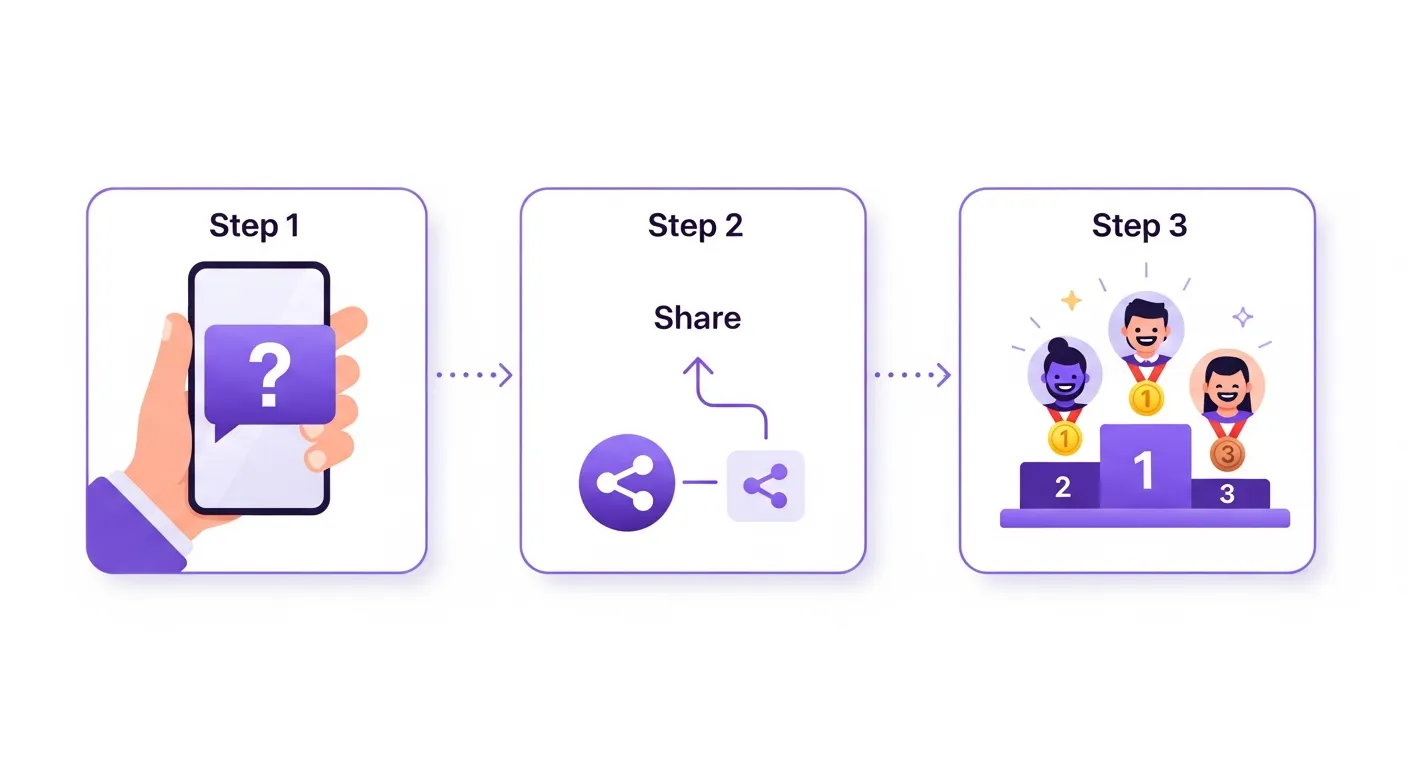
How does a BFF test work?
No app download. No email address. No account. Here is the full process:
-
You answer 10 questions about yourself. Takes about two minutes. These become the answer key. The more honest you are, the more interesting the results get. Picking the "impressive" answer is tempting but defeats the point entirely.
-
You get a personal quiz link. It's yours. It never expires. Send it to one person or drop it in a group chat and let chaos do the rest. (Group chat is, statistically, more entertaining.)
-
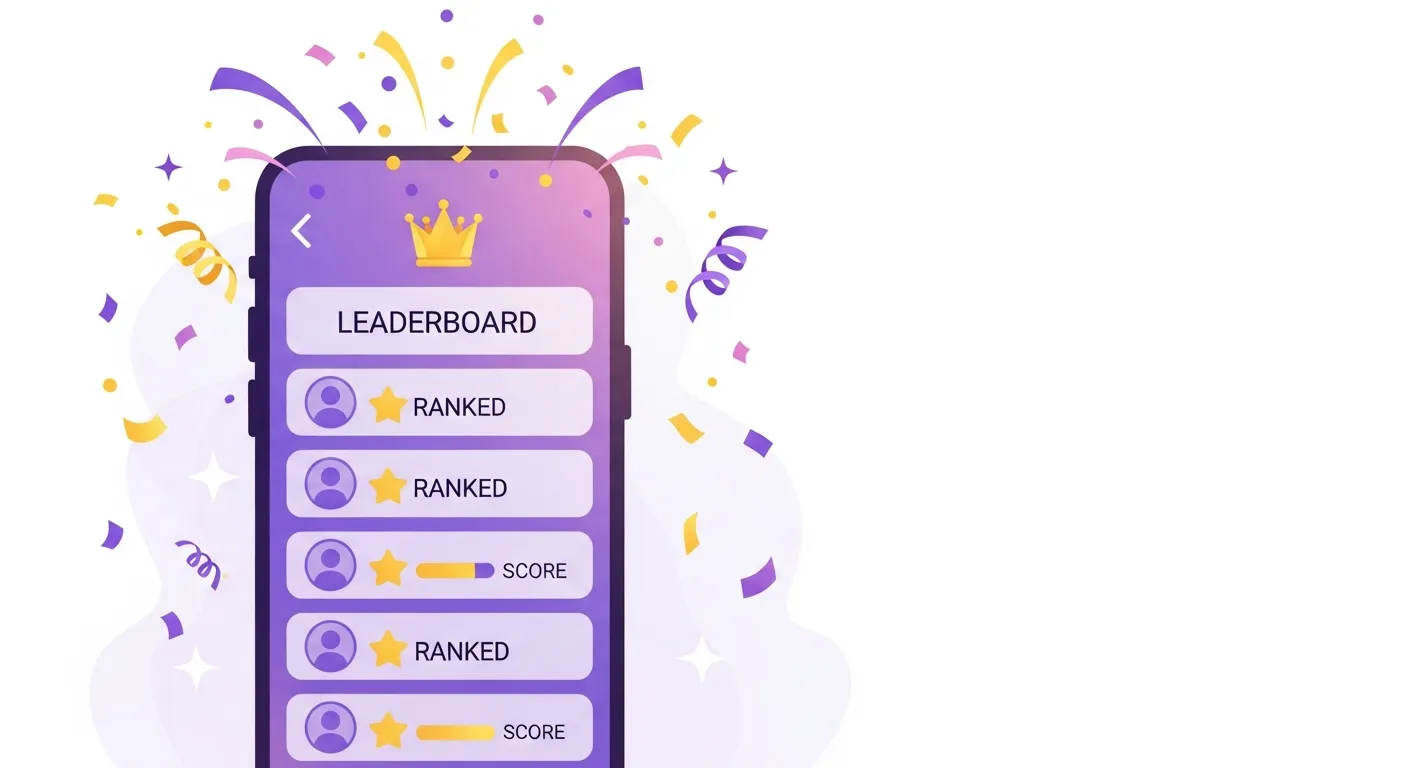
Friends play and get scored automatically. They answer the same 10 questions trying to match your answers. Every match is a point, and their result lands on your leaderboard in real time. You don't have to tally anything. The quiz does the maths. You do the judging.
The leaderboard is the part people underestimate. A score on its own is a fun fact. A score that all your other friends can also see is a competition. Which means one quiz, sent to twelve people, quietly becomes twelve people arguing in your comments about who knows you better.
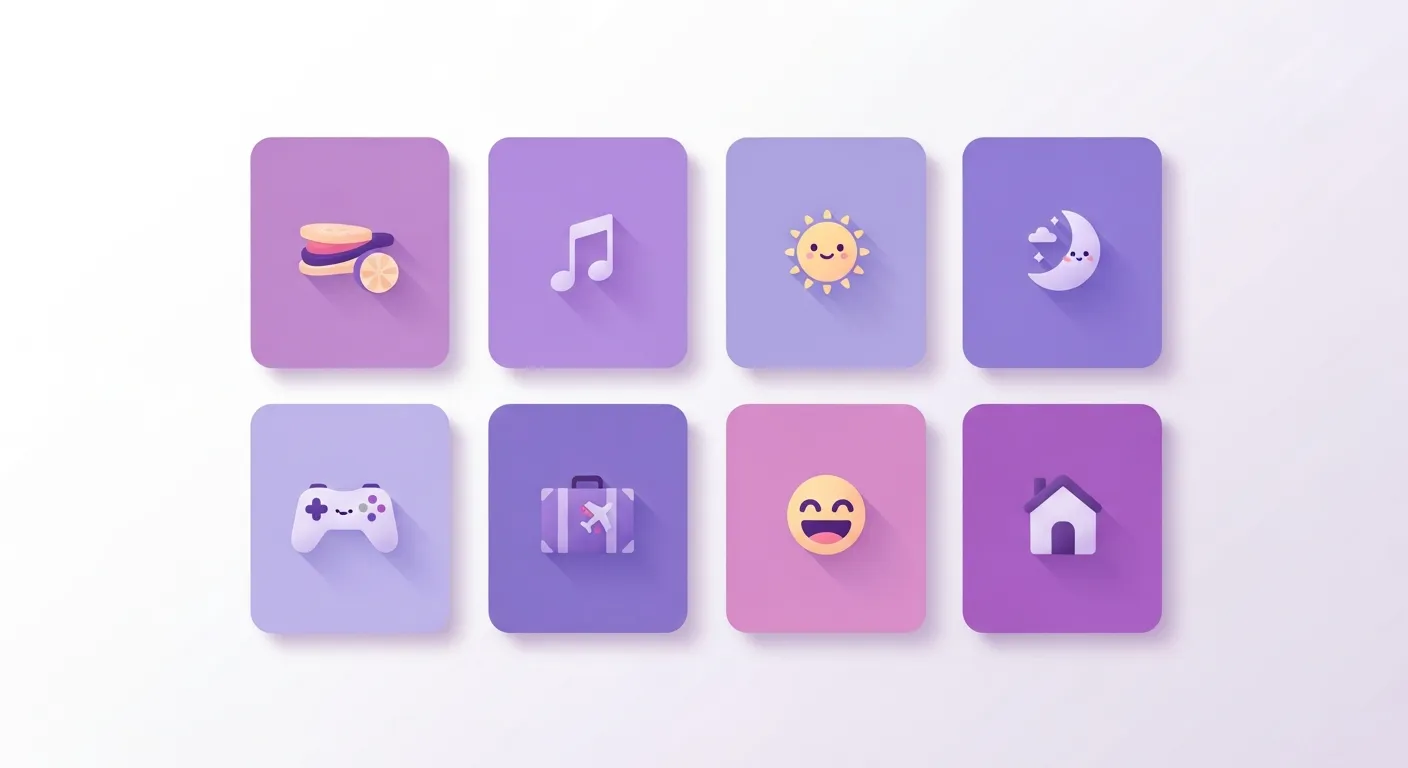
What questions are on a BFF test?
Good BFF test questions live in the gap between "they definitely know this" and "wait, do they?" Close enough to feel fair. Specific enough to be revealing. The fun is in the near-miss — the confident wrong answer is funnier than a missed obscure detail.
A solid BFF test covers four areas:
- Favourites — food, music, movies, comfort TV. Easy entry point. But even here, people get it wrong more than they expect.
- Daily habits — are you a morning person or night owl, what's the first app you open, how do you spend a free afternoon. This is where casual friends fall off and close friends pull ahead.
- Personality — how you handle stress, what makes you actually angry, introvert or extrovert in your daily life. Harder. Most revealing.
- Lifestyle — what your ideal weekend looks like, where you'd want to travel, what kind of social energy you prefer.
Here is what those questions look like in practice:
Ten questions. That's the right number. Enough to reveal something real. Short enough that your bestie actually finishes it instead of promising they will and forgetting by Thursday.
What are the 3 types of BFF quiz?
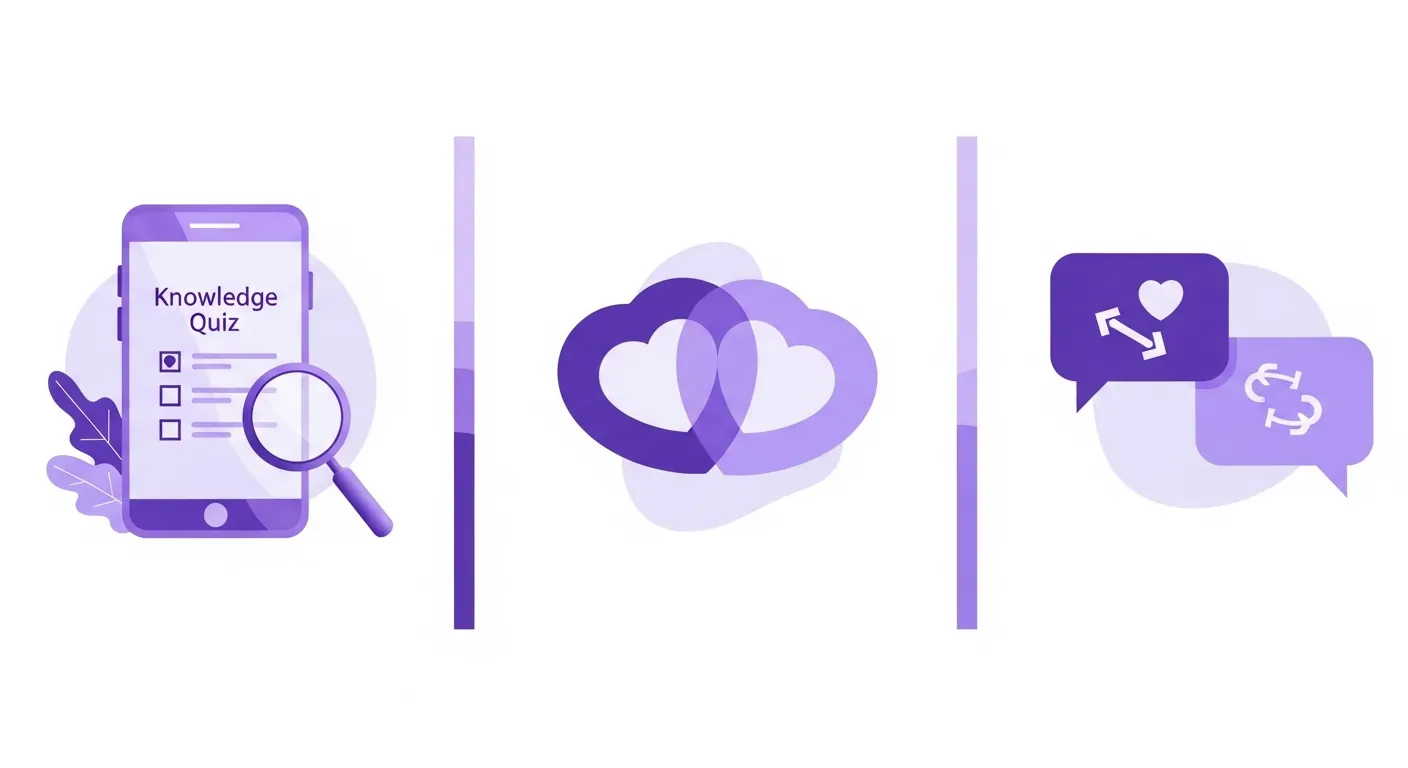
These names get used interchangeably online, but they measure different things. Here's the distinction in plain terms:
Knowledge-based BFF test
You set the answers. Your bestie guesses. The score shows how well they know the real you. This is what people mean when they say "BFF test." It produces a number. Numbers go on leaderboards.
Compatibility quiz
Both people answer questions about the friendship itself. The result shows your dynamic — how aligned you are, where you differ. More reflective, less competitive. No leaderboard. Good for a deep conversation.
Inside-joke quiz
Questions specific to your shared history — "What was the phrase we said that one time?" or "What film do we quote constantly?" Requires context to work. Not shareable to strangers. Best for very close pairs.
If you want a score, a leaderboard, and an argument in a group chat: you want Type 1. That's what Best Friend Game's free BFF test is built for.
If you want to explore the friendship itself: go with a compatibility quiz afterward. Many people end up doing both, in that order. The knowledge-based test breaks the ice. The compatibility one deepens it.
What is a good BFF test score?
The score is out of 10. Here's the honest breakdown:
| Score | What it means |
|---|---|
| 9–10 / 10 | Certified bestie. Knows you frighteningly well. Keep this person close. |
| 7–8 / 10 | Great friend. Genuinely paying attention. This is a solid score. |
| 5–6 / 10 | Good foundation. They know the surface-level you. More time together fixes this. |
| 3–4 / 10 | Getting there. They know the public version. The real you is still loading. |
| 0–2 / 10 | Strangers with a history. Impressive, in a way. Rematch scheduled. |
A 6 who argues the result, demands a rematch, and sends a voice note explaining why the "morning person" question was ambiguous is a better best friend than a quiet 10. The score tells you how much they know. What they do with it tells you how much they care. Given that 47% of American adults now report having three or fewer close friends (Gitnux, 2023), a friend who is annoyed by a 6 is worth keeping.
Why do BFF tests go viral?
Friendship quizzes come back like a very reliable comet. Every year or two they sweep through group chats, then go quiet, then return. The reason is not a new algorithm. It's the same reason they worked on paper notes passed in class in 2008.
The result is a number. Numbers are shareable. And a number that ranks your friends — publicly, on a leaderboard — triggers something deeply competitive in people who would describe themselves as "not competitive at all."
There's also something real underneath the fun. Research consistently links close friendships to better physical health, lower stress, and longer lives — the Mayo Clinic has documented this for decades. When someone forwards your BFF test, they're not just sharing a link. They are, without quite knowing it, checking in on a friendship.
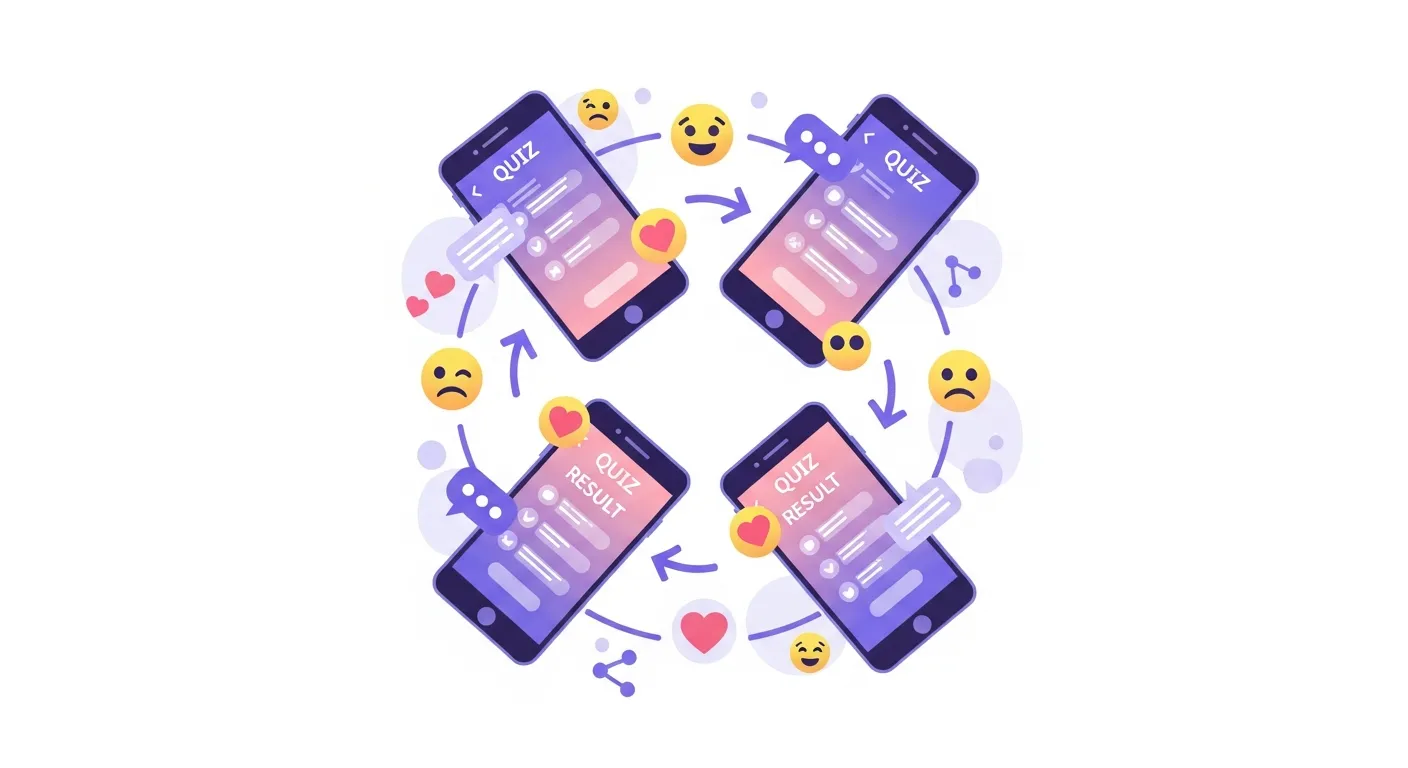
And then there is the purely mechanical reason: the quiz markets itself. A friend who scores a 4 does not silently accept a 4. They send the test to five other people to confirm the questions were unfair. Each of those five has the same reaction. One quiz, sent once, can reach thirty people without you doing anything. That's not a feature. That's the whole model.
How do you share a BFF test on WhatsApp and Instagram?
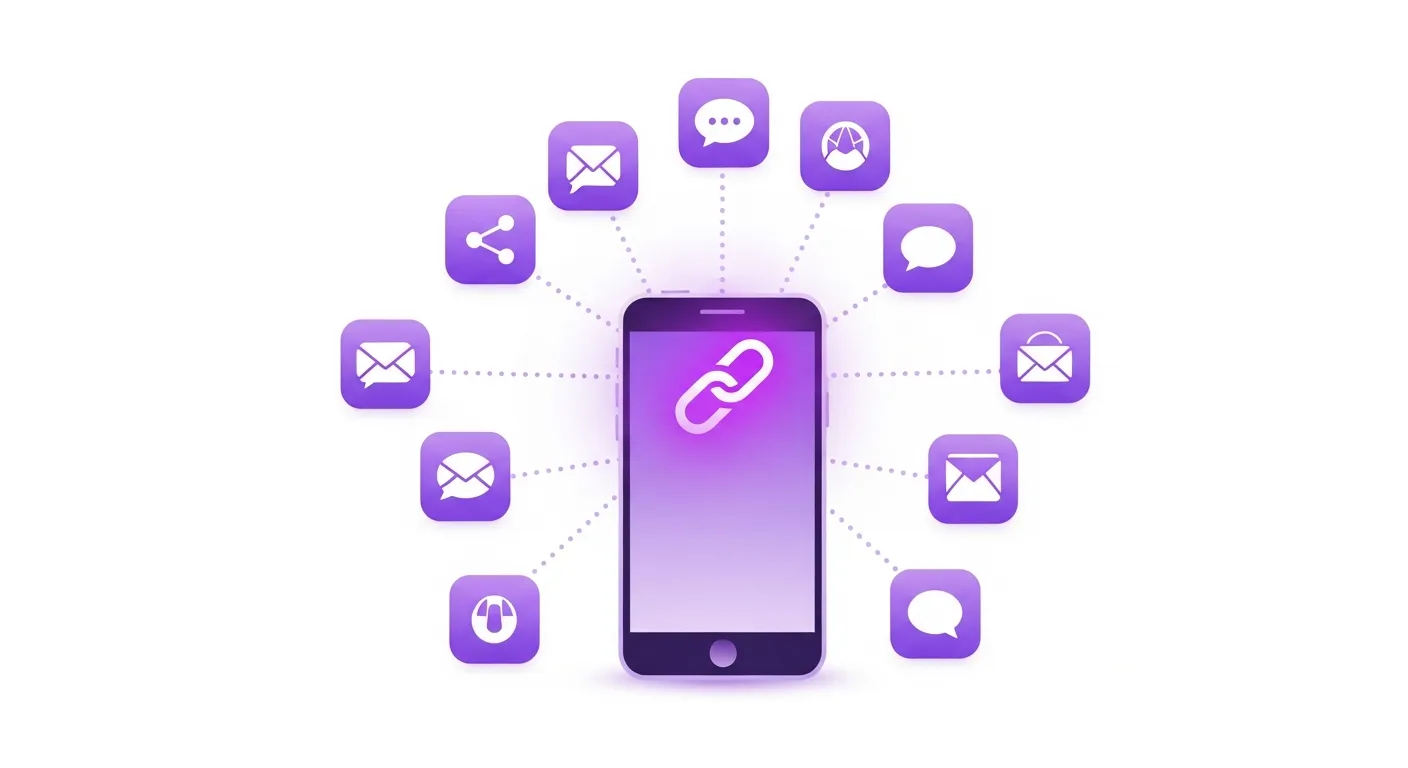
Once you finish your quiz, you get a link. One link. It works on every platform and never expires. Here's what actually converts:
WhatsApp Status is consistently the highest-reach move. A caption like "let's see who actually knows me" works because it's a challenge, not a request. People feel compelled to prove something. The quiz gets played. The scores roll in.
Instagram Stories with a link sticker works the same way — swipe up, answer, get judged. The visual format also lets you screenshot your leaderboard and post it as a follow-up, which generates a second wave of people wanting to beat whoever's currently at the top.
Direct message is slower but personal. Sending the quiz to one specific person says "I want to know if you've been paying attention." That's a different pressure, and it usually gets answered faster than the group chat.
One practical note: if you have friends who prefer a different language, they can switch the quiz language when they open the link. The Best Friend Game BFF test runs in 15 languages — Hindi, Arabic, Spanish, Bengali, and more. You don't need to do anything extra. The link handles it.

How do you make a BFF quiz people actually take?
Most people create the quiz and share it. Some people do two extra things that make it significantly harder to ignore:
- Be specific in your answers. "Pizza" is guessable. "Margherita, but only from that one place, and only on Fridays" is not — and that gap between expected and actual is what makes the quiz memorable. Vague answers produce boring results.
- Include one answer that surprises people. The question about your music taste is a good candidate. If your friends don't know about the guilty-pleasure playlist, that's exactly the kind of reveal that makes someone screenshot their result and text you about it.
- Share it twice. Post it, wait 48 hours, then post a screenshot of your current leaderboard. The scoreboard creates urgency. People who didn't play the first time will play to protect their ranking — even if they're not on it yet.
- Caption it like a challenge, not a request. "Can you guess my answers?" gets fewer clicks than "Let's find out who actually knows me." Small difference in framing. Significant difference in conversion. People respond to a challenge they think they can win.
Your bestie is waiting to prove themselves
Two minutes to create. No sign-up needed. Works on every platform.
Create My BFF Test FreeStraight answers
What is a BFF test?
A BFF test is a quiz you answer about yourself — your favourite food, your morning routine, how you handle stress — and then your best friend tries to match your answers. Every correct guess earns a point. Their score out of 10 tells you, with no diplomatic rounding, exactly how well they know you.
What are good BFF quiz questions?
The best BFF test questions mix a few easy ones (favourite food, morning or night owl) with a few that only someone paying real attention would get right (the app you check first in the morning, what makes you irrationally angry, how you actually spend a free Saturday). Ten questions is the sweet spot. Enough to be revealing, short enough that your bestie finishes it instead of promising they will and quietly never doing it.
How do I make a BFF test online for free?
Go to Best Friend Game, enter your name, answer 10 questions about yourself, and grab your quiz link. No account, no email, no cost. The whole thing takes under two minutes. Share the link on WhatsApp, Instagram, Snapchat, or anywhere else — your friends' scores land on your leaderboard automatically.
What is a good score on a BFF test?
9–10 out of 10 means certified bestie — they know you frighteningly well. 7–8 is a genuinely great score and means they're paying close attention. 5–6 is solid with room to grow. Below 5 means more quality time is needed, which is not exactly a hardship. The more interesting question is what they do with the score — a 6 who immediately demands a rematch is worth more than a 9 who says nothing.
Why are BFF quizzes so popular on social media?
Because the result is a shareable number, and numbers start arguments. A friend who scores a 4 does not quietly accept a 4 — they send the quiz to five other people to confirm the questions were unfair. Each of those five has the same reaction. The quiz markets itself. That's the whole mechanic, and it has worked since paper friendship tests were being passed in classrooms in the early 2000s.
What's the difference between a BFF quiz and a compatibility test?
A BFF quiz measures knowledge: your bestie tries to guess your actual answers, and the score shows how well they know the real you. A compatibility test measures the friendship dynamic: both people answer questions about the relationship itself. One gives you a number and a leaderboard. The other gives you a reflection. Both have their place. Most people want the number first.
Can I send a BFF test on WhatsApp?
Yes. Once you create your quiz, you get a personal link. Post it to your WhatsApp Status, send it directly in a chat, or drop it in a group. When a friend taps it, they answer the same questions trying to match yours. Their score goes to your leaderboard automatically — you don't have to tally anything or follow up. The quiz does all of that.
The average person now has fewer close friends than at any point in the last 30 years. (That's not an opinion — it's the Survey Center on American Life's finding, and it is, in fact, a bit grim.) A two-minute quiz won't fix that. But a quiz that starts a conversation, sparks a rematch, and turns into a group chat that runs until midnight is doing more than it looks like. Send it. Find out who was paying attention. The answer might surprise you. It probably won't surprise your barber, for reasons that remain unclear.